Home Builders' Guide: Design Flexibility
Section 4 of the Home Builders' Guide to Acoustical Plaster

Section 4 of the Home Builders' Guide to Acoustical Plaster
The most persistent misconception about acoustical plaster among builders encountering it for the first time is the assumption that acoustic performance requires visible treatment. This assumption is drawn from experience with earlier-generation products: foam tiles, fabric panels, perforated modules, suspended baffles. Each announces its presence. Each asks the room to make an aesthetic concession to acoustic function.
Acoustical plaster operates on a fundamentally different premise. The finish looks exactly like plaster. It is specified and installed like plaster. Its acoustic performance is embedded within it, invisible to any inspection that does not involve laboratory equipment. The design latitude this affords is not an incidental benefit; it is the product's defining quality.
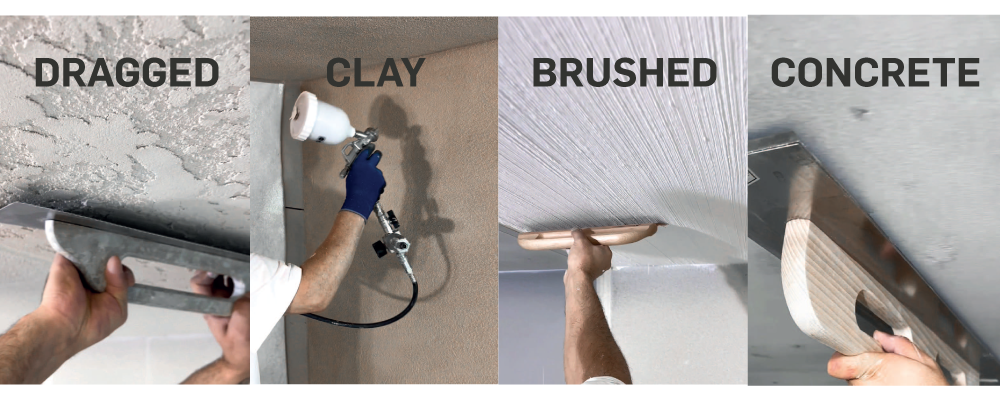
Finish textures are determined by aggregate grain size and application method, and the range is extensive. The finest finish, achieved with a 0.5mm aggregate and trowel application, presents as a surface comparable in refinement to Venetian plaster: a slightly mineral, subtly varied skin that reads as a premium interior finish. Coarser aggregates at 0.7mm and above open the palette to textures with more visible character.
Beyond aggregate specification, application technique extends the range of achievable surfaces considerably. Skilled applicators can create knock-down textures, aged stucco effects, old-world plaster surfaces, and finishes that replicate concrete, limestone, travertine, or rough-hewn stone. These are not surface graphics applied over an acoustic system. They are the finish itself, executed in acoustically transparent marble plaster. The system performs at its rated NRC regardless of which texture is chosen, because the acoustic mechanism is in the mineral wool panel beneath, not in the finish surface above it.
Spray and trowel application each have distinct characteristics. Trowel application carries the hand and variation of traditional plaster craft, producing surfaces with the subtle irregularity associated with artisan finishing. Spray application offers greater uniformity and is more practical for large ceiling areas or consistent textural effects at scale. Both methods are suitable for the full range of panel thicknesses.
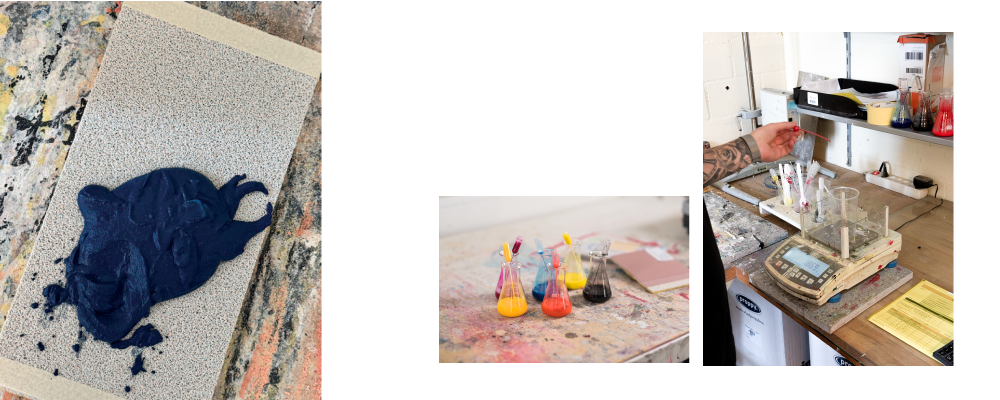
The finish system is available in any custom color. The coloration process does not affect acoustic performance: the tint is integral to the marble aggregate rather than a surface sealant, and the micropores responsible for sound absorption remain open and functional regardless of the color specified.
The practical implication is that a builder can specify acoustical plaster in a color matched precisely to the design palette of any room: a ceiling in the exact bespoke white of the surrounding trim, a feature wall in a custom limestone tone, a theater ceiling in a rich warm neutral. The acoustic treatment disappears into the design because it is, architecturally, part of the design.
Light reflectance is also preserved. Acoustical plaster ceilings reflect light at levels comparable to conventional white finishes, with tested light reflectance values that support luminous ceiling-wash lighting design without compromise. This distinction matters in rooms where the lighting design assumes high ceiling reflectance, a common condition in luxury residential interiors.
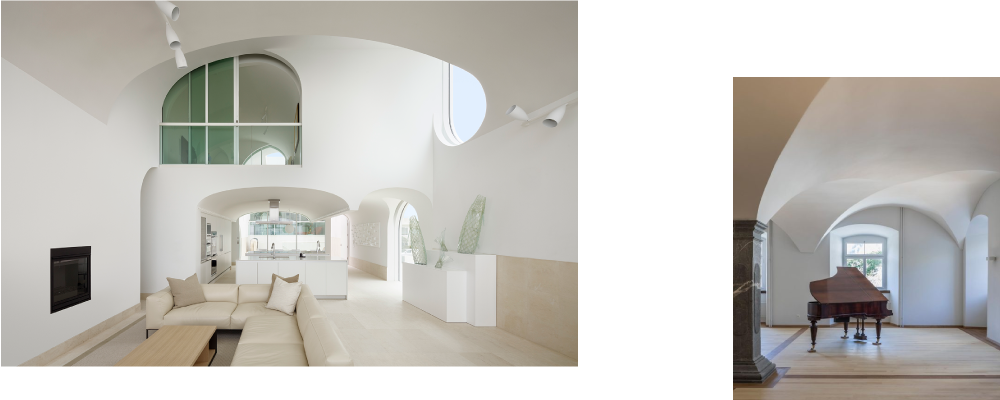
Acoustical plaster panels can be applied to curved, domed, barrel-vaulted, and compound-curved surfaces. This geometric flexibility is particularly relevant for luxury residential commissions that include arched entry halls, dome ceilings, curved media room soffits, or vaulted libraries. The panel system conforms to the surface geometry of the structure, and the continuous finish eliminates the grid-based constraints that make panel systems impractical or visually incompatible with complex architectural forms.
This capability also makes acoustical plaster appropriate for renovation work on historic or period residential properties, where existing plaster profiles, medallions, cornices, and cove details need to be preserved, matched, or sympathetically extended. The marble aggregate finish can be troweled to read as a continuation of period plaster craft with a level of fidelity that modular panel systems cannot achieve.
A consistently raised concern from builders first specifying acoustical plaster is the accommodation of penetrations: lighting fixtures, HVAC diffusers, fire suppression heads, audio equipment, and access panels. The answer is practical and straightforward.
Recessed lighting fixtures, including trimless zero-reveal housings, are integrated during rough-in and finished within the system without the blocking requirements associated with standard gypsum board assemblies. HVAC diffusers and fire sprinkler heads are accommodated at the finishing stage, with the plaster continued to the perimeter of each element. Access panels up to 8 feet by 8 feet are available with acoustical plaster finish applied to the face, maintaining the monolithic surface even where mechanical or maintenance access is required.
Audio speakers can also be integrated directly into the surface. An acoustical plaster ceiling in a music room or home theater can conceal in-wall and in-ceiling speakers within the treated surface itself, consolidating acoustic treatment and audio distribution into a single uninterrupted architectural finish.
See the full range of products and system options.
Section 1: Introduction: The Missing Dimension in Residential Design
Section 2: What Acoustical Plaster Is and How It Works
Section 3: Where Acoustical Plaster Belongs in a Residence
Section 4: Design Flexibility for Surfaces That Perform and Persuade
Section 5: A Builder's Perspective to Installation, Coordination, and Timeline
Section 6: The Value Case: Immediate, Long-Term, and Lasting
Section 7: How to Introduce Acoustical Plaster into Your Specification
Connect with our skilled network of certified installers
BASWA's network of certified installers is available throughout the world. Contact the installer in your project location.
