Home Builders' Guide: A Builder's Perspective on Installation
Section 5 of the Home Builders' Guide to Acoustical Plaster

Section 5 of the Home Builders' Guide to Acoustical Plaster
For builders adding acoustical plaster to their program for the first time, the construction and coordination questions are both practical and manageable. The following addresses each dimension relevant to project delivery.
Acoustical plaster installation is performed by certified local contractors, typically plasterers, tapers, or specialty finish carpenters trained specifically in the system's installation protocols. Certification ensures that the installer understands the panel preparation, seam treatment, and finish application procedures required to achieve the acoustic performance the system is rated for.
A network of more than 115 certified independent installers operates across North America, providing coverage in virtually every high-end residential market. This means the builder does not need to import specialty labor or manage unfamiliar subcontractor relationships. The certified installer network is established, vetted, and supported by the manufacturer's technical team throughout the installation process. Find a certified installer.
Acoustical plaster is a finish trade, scheduled after mechanical rough-in is complete and before final paint and millwork installation. The sequence integrates into a standard luxury residential finish schedule without structural modification to the program.
A typical installation for a residential ceiling or wall application requires four to five days of installation time, including panel setting and finish coat application, with overnight drying between coats. This timeline is predictable and does not introduce the scheduling uncertainty sometimes associated with specialty finish materials on critical-path residential programs.
Panel weight is approximately 1.5 pounds per square foot, which does not impose structural demands beyond standard ceiling framing. No special blocking or supplementary structural support is required for ceiling applications within normal residential framing spans. Learn about the installation process.
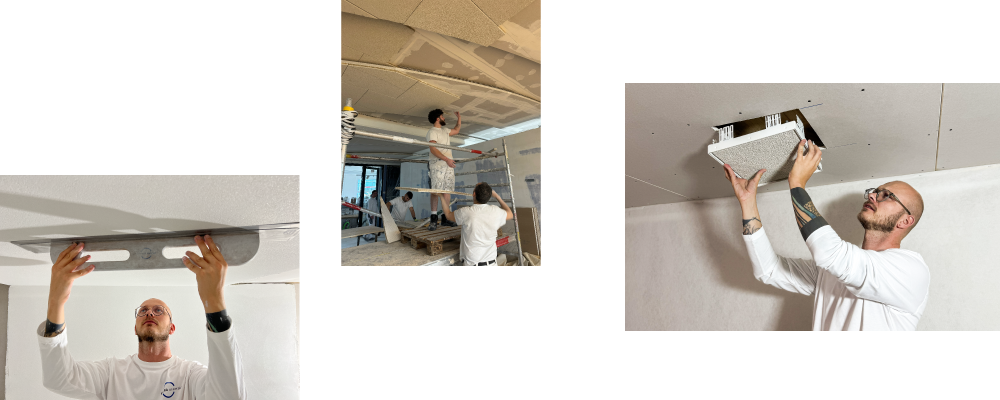
One of the practical efficiencies that builders with experience in acoustical plaster consistently identify: the system does not require drywall blocking for light fixture or diffuser locations. Standard rough-in procedures apply. This simplifies the framing phase and reduces the coordination burden during rough-in, particularly in ceiling areas with complex lighting layouts.
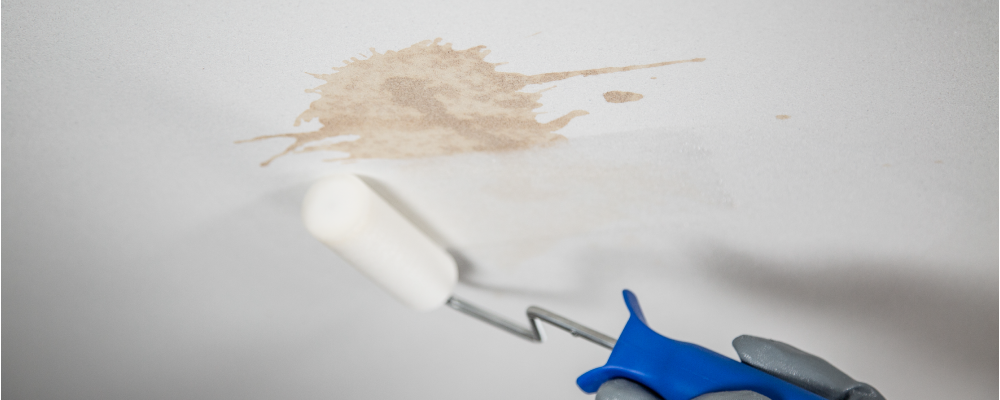
The marble aggregate finish is durable, cleanable, and repairable. In the event of localized damage from renovation activity, plumbing access, or lighting upgrades, the surface can be patched by a trained certified installer with results that are visually continuous with the original installation. This repairability is significant in luxury residential work, where finish quality is expected to be maintained over decades without visible degradation.
There are no fabric panels to re-cover over time, no foam elements to replace as they age and compress, and no suspended baffles to clean or reposition. The system delivers its rated performance at installation and maintains that performance indefinitely under normal conditions. Learn about Cleaning and Maintenance.
For builders whose clients are building to certification standards, or whose projects engage WELL Building Standard or LEED consultants, the credential profile of acoustical plaster is directly relevant.
Sustainability and Certification Credentials
Acoustical plaster systems contribute to LEED credits, including materials content, indoor air quality, and acoustic performance.
Health Product Declarations (HPDs) and Environmental Product Declarations (EPDs) are available for all system components.
Zero VOC content, meeting California Section 01350, the most stringent indoor air quality standard in the U.S. market.
Certified for no mold growth per ASTM D3273, qualifying the system for use in humid environments including aquatic and spa spaces.
Panel composition includes up to 92% natural and recycled materials, including recycled glass aggregate.
Access HPDs, EPDs, and installation documentation.
Section 1: Introduction: The Missing Dimension in Residential Design
Section 2: What Acoustical Plaster Is and How It Works
Section 3: Where Acoustical Plaster Belongs in a Residence
Section 4: Design Flexibility for Surfaces That Perform and Persuade
Section 5: A Builder's Perspective to Installation, Coordination, and Timeline
Section 6: The Value Case: Immediate, Long-Term, and Lasting
Section 7: How to Introduce Acoustical Plaster into Your Specification
Connect with our skilled network of certified installers
BASWA's network of certified installers is available throughout the world. Contact the installer in your project location.
