Restaurant Acoustics: A Guide to Acoustical Plaster
How seamless acoustical plaster controls restaurant noise: where sound builds, which BASWA systems fit, and what to plan before you specify the ceiling.
Restaurant acoustics is how sound behaves in a dining room: how long it lingers, how loud the room gets as it fills, and how easily guests can talk. Hard surfaces reflect sound, so reverberation builds and guests raise their voices to be heard. Acoustical plaster treats the problem at its source without changing how the room looks.
Acoustical plaster is a seamless ceiling and wall finish that absorbs sound. In a BASWA system, a sound-absorbing panel is adhered to the substrate and finished with a micro-porous marble aggregate plaster. Sound passes through the pores and is converted to heat in the panel instead of reflecting back into the room.
Restaurants use it on ceilings and upper walls to keep a room lively without letting it get loud. BASWA acoustical plaster systems are installed by certified installers in new construction and renovations across North America.
The Acoustic Problem
When the Room Competes with the Table
A dining room can get every visible detail right and still miss on one invisible one: sound. The hard surfaces that give a room its character (concrete, stone, glass, plaster) reflect sound back into the space. As the room fills, guests talk louder to be heard over each other, and the noise builds on itself.
The research on what that costs is consistent:
In a lab study, participants began raising their voices at about 57 dB(A) of restaurant noise, and their willingness to spend time and money in the restaurant began to drop at about 52 dB(A). [1]
Sound measurements from nearly 1,300 Manhattan restaurants found 71% too loud for comfortable conversation, and 31% averaging above 80 dB(A). [2]
Noise changes how food tastes. Under loud background noise, participants rated foods as less salty and less sweet, while crunchy foods seemed crunchier. [3]
Quieter isn't automatically better. In a field study of Berlin restaurants, how pleasant diners found the soundscape predicted their overall satisfaction. [4] The same researchers concluded that restaurant acoustics involve a trade-off between comfort and liveliness, depending on the character the room is meant to have. [5]
Where Sound Builds
The Acoustic Anatomy of a Restaurant
Every layout has its own trouble spots. These are the most common:
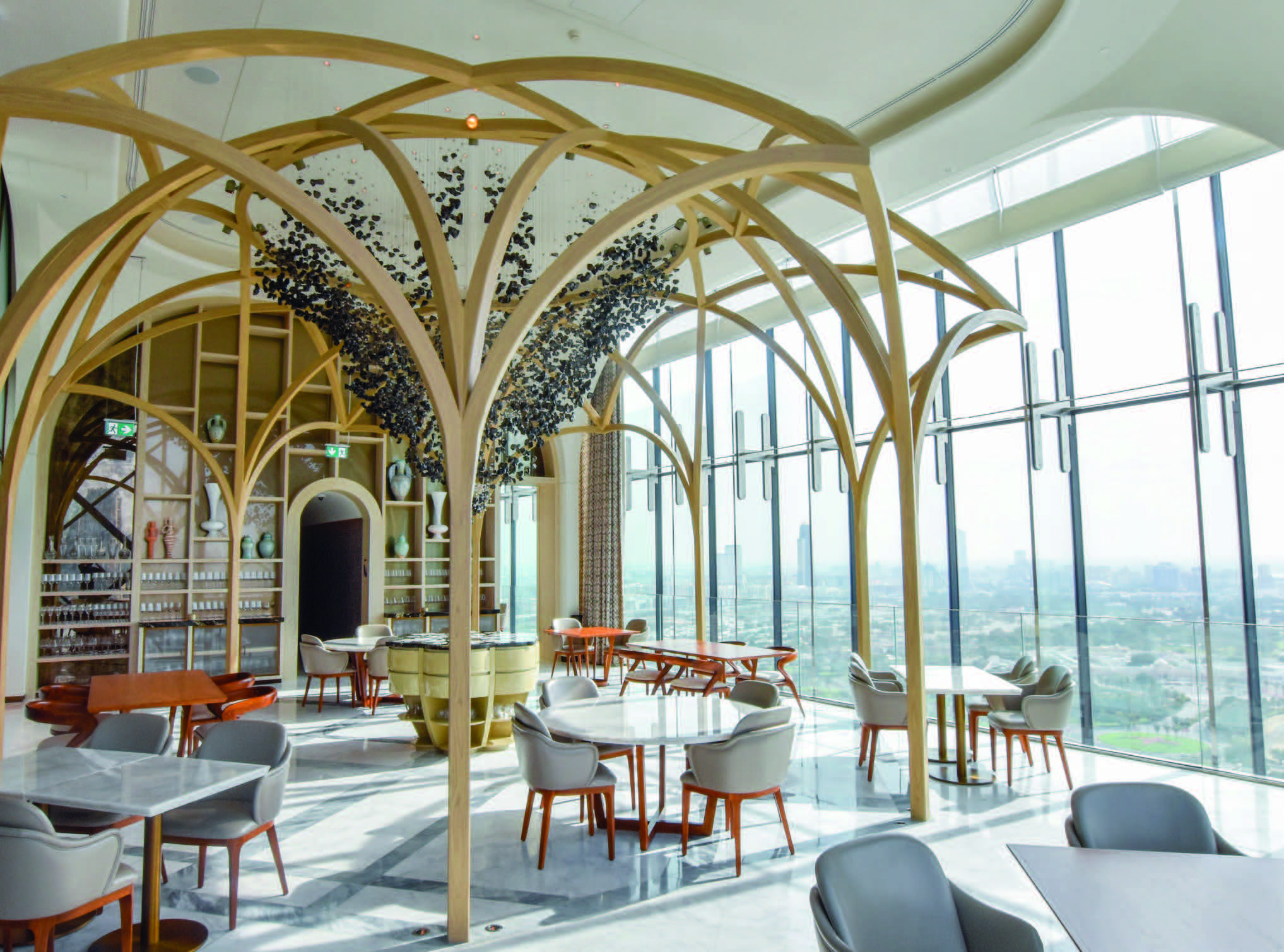
High ceilings and open volumes. Converted lofts, atriums, and warehouse concepts give sound a long path between hard surfaces. Reverberation lingers and conversation blurs, even at moderate occupancy.
Hard-surface interiors. Stone floors, plaster walls, glass partitions, and polished concrete are among the most reflective finishes in any building. A room made mostly of them amplifies noise instead of containing it.
Open kitchens. The line, the hood, and the pass add a steady source of sound that raises the baseline for the whole room.
Private dining rooms. Small rooms with parallel hard walls can produce flutter echo, a fast, repeating reflection that is especially distracting in a room built for conversation.
Adjacent bars. Crowd noise, music, and glassware carry into the dining room. Absorptive finishes on both sides help with mid and high frequencies. Low-frequency music travels through the structure and calls for sound isolation, not absorption.
Covered patios and transition spaces. Semi-enclosed terraces and courtyards combine hard surfaces with outdoor sound, and they are easy to underestimate during design.
BASWA acoustical plaster integrates into ceiling designs with subtlety, allowing other design elements to shine.
The best restaurant acoustics are the ones no one notices, only the ease of the conversation.
The Solution
How BASWA Systems Work
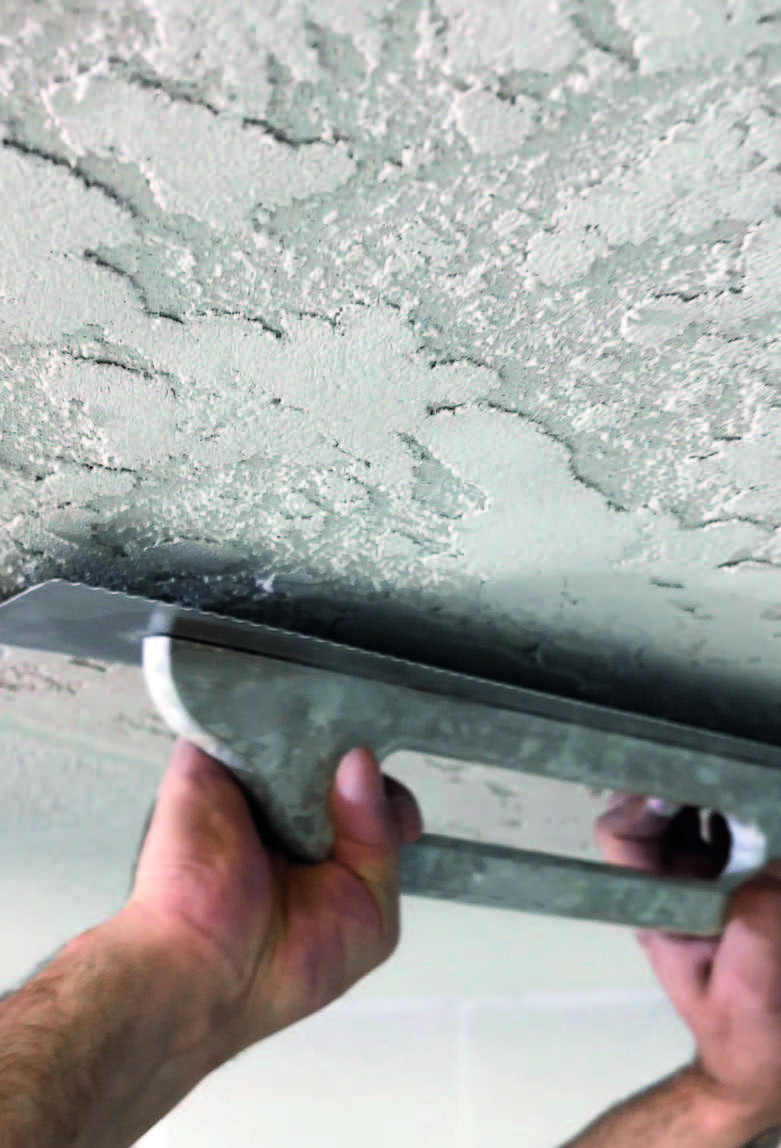
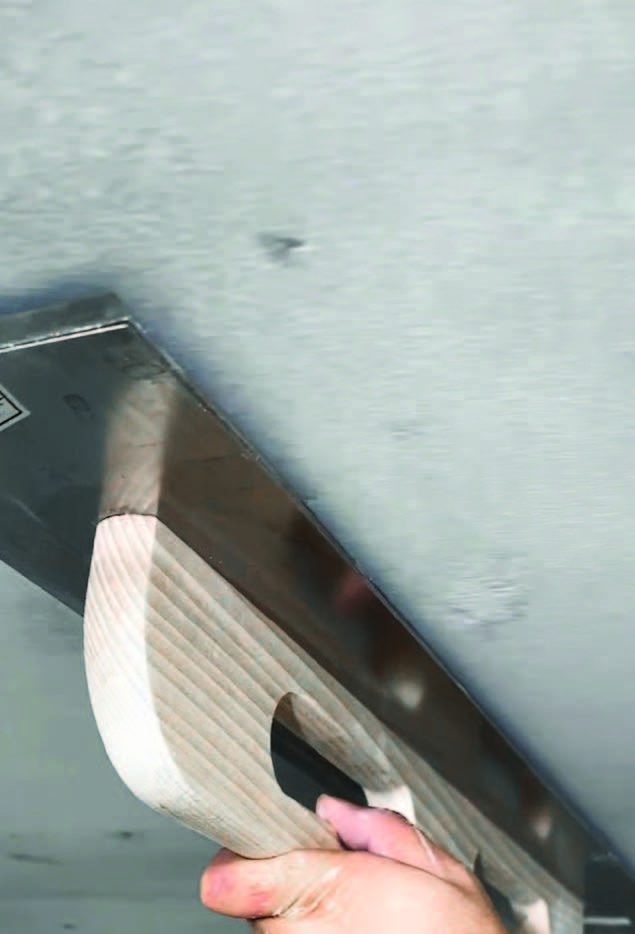
A BASWA system is built in layers. A sound-absorbing panel is adhered to the substrate, the seams are filled, and a micro-porous marble aggregate finish is troweled or sprayed over the top. The result has no grid, no panel edges, and no perforations.
Because the system covers whole ceiling and wall planes rather than isolated patches, it brings reverberation down across the entire room. That includes irregular plans, multiple levels, vaults, and domes, where panels and baffles struggle.
BASWA Phon adheres to drywall, concrete, or existing plaster, and it follows curves, domes, and groin vaults. It comes in 30, 40, and 70 mm thicknesses, with NRC ratings from 0.80 (30 mm) to 1.00 (70 mm) depending on finish and thickness. [6] A typical installation takes 4 to 5 days.
BASWA Basic is for flat ceilings and walls. It is 30 mm, with NRC ratings of 0.70 to 0.75 depending on finish. [7] With the One finish it installs in as few as 1 to 2 days, which helps when a renovation means closing the dining room. Its impact resistance suits walls that guests and staff brush against.
BASWA DTG installs on a drywall grid and needs no continuous substrate. It is 30 mm, with NRC ratings of 0.75 to 0.80 depending on finish. [8]
All three carry a Class A fire rating per ASTM E84. NRC (Noise Reduction Coefficient) is a single-number rating averaged from lab absorption measurements; the higher the number, the more sound the surface absorbs. Compare the performance of BASWA systems.
Finish and Customization
Where Acoustic Performance Meets Design
A common assumption is that acoustic performance costs the design something. Color, texture, and form all stay open, and the finish can read as an intentional design material rather than an acoustic fix.
Classic Fine uses a 0.5 mm marble aggregate for the smoothest surface. Base, Classic Base, and Frost use 0.7 mm. The two-coat Classic finishes are the choice for ceilings under grazing light, which is common with cove lighting and wall washers.
Any color
Color is mixed into the finish itself, so a custom color has no effect on acoustic performance. Colors can be matched to a paint standard or a physical sample.
Custom texture
A custom finish can be hand-troweled or sprayed to recall concrete, stone, stucco, or old-world plaster, so the acoustic layer disappears into the room's material story.
Integrated fixtures
Recessed lighting, air diffusers, sprinkler heads, and concealed speakers are roughed in at finished ceiling height and cut in on site.
Repairable
A damaged area can be repaired with techniques similar to drywall repair. BASWA Clean, BASWA Protect, and BASWA Fresh keep the surface clean and refreshed without closing its pores.
Before You Specify
What to Plan For
Bring in an Acoustical Consultant Early
An acoustical consultant can set the reverberation target, identify which surfaces to treat, and choose the system thickness. Retrofits work well, but early integration is simpler.
Coordinate Lighting and Mechanical
Fixtures, diffusers, and sprinklers are roughed in at finished ceiling height before panels go up. Settling their locations during construction documents protects both the acoustic performance and the continuity of the ceiling.
Sequence the Installation
BASWA systems go in at about the same point in the schedule as lay-in ceiling tiles. Before that, the substrate is taped to Level 1, penetrations are sealed, abutting drywall is primed, and the space is conditioned. Learn more about installing BASWA systems.
Plan Renovations in Phases
BASWA Phon can go directly over existing stable plaster, and BASWA Basic's short install window helps keep closures brief. Assess the existing ceiling and wall conditions before specifying.
Treat the Whole Acoustic Picture
Acoustical plaster handles reverberation and mid-to-high frequency noise. Floors, upholstery, drapery, and mechanical equipment still shape how the room sounds, and low-frequency music moving between rooms is a sound isolation question. A consultant can show where plaster alone solves the problem and where other measures add value.
Final Consideration
A Restaurant That Sounds as Good as It Looks
Every decision in a dining room is deliberate, from the lighting to the distance between tables. Sound deserves the same attention. Acoustical plaster resolves a long-standing tension in restaurant design: hard, beautiful surfaces on one side, comfortable conversation on the other. It does its work quietly, for the life of the building.
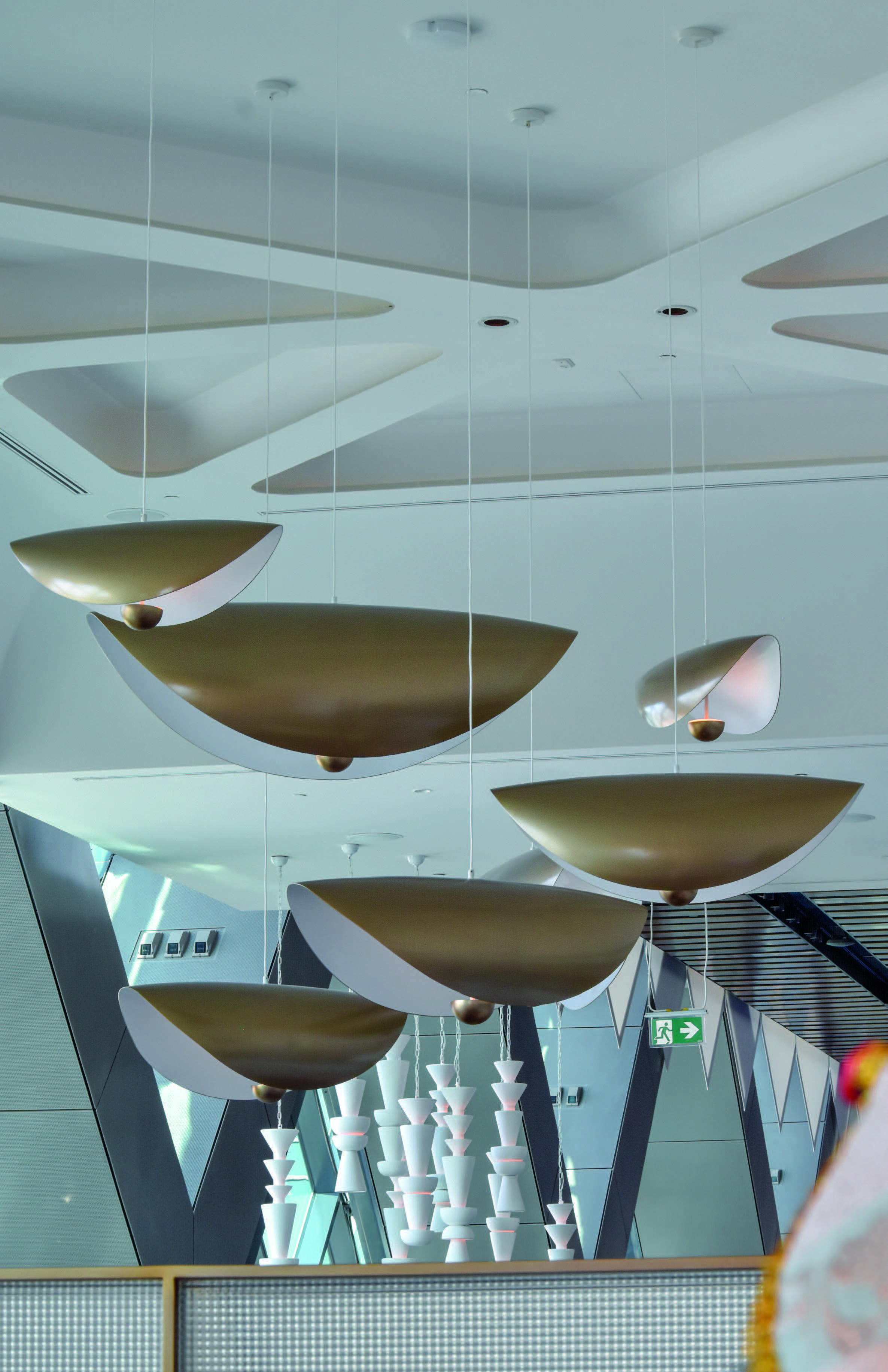
[Image: BASWA Complex Ceiling with Recesses, unchanged] Caption: BASWA systems follow recesses, vaults, curves, and domes, so even a complex ceiling can read as one continuous surface.
Citations
Bottalico, P. "Lombard effect, ambient noise, and willingness to spend time and money in a restaurant." The Journal of the Acoustical Society of America, 144(3) (2018), EL209–EL214. https://doi.org/10.1121/1.5055018
Scott, G., and Wang, L.M. "Analyses of crowd-sourced sound levels of restaurants and bars in New York City." Proceedings of Meetings on Acoustics, 31(1) (2018), 040003. Link
Wilczek, T., Steffens, J., and Weinzierl, S. "Room acoustics, soundscapes and customer satisfaction in restaurants: a field study." Proceedings of the International Symposium on Room Acoustics (2019). https://doi.org/10.18154/RWTH-CONV-240148
Steffens, J., Wilczek, T., and Weinzierl, S. "Junk food or haute cuisine to the ear? Investigating the relationship between room acoustics, soundscape, non-acoustical factors, and the perceived quality of restaurants." Frontiers in Built Environment, 7 (2021). https://doi.org/10.3389/fbuil.2021.676009
BASWA acoustic North America. Test Data Sheet: BASWA Phon. Link
BASWA acoustic North America. Test Data Sheet: BASWA Basic. Link
BASWA acoustic North America. Test Data Sheet: BASWA DTG. Link
Complexity of design is what BASWA systems were made for, forming around recesses, vaults, curves, or domes.
Skillful Certified Installers
Connect with our skilled network of certified installers BASWA's network of certified installers is available throughout the world. Contact the installer in your project location.