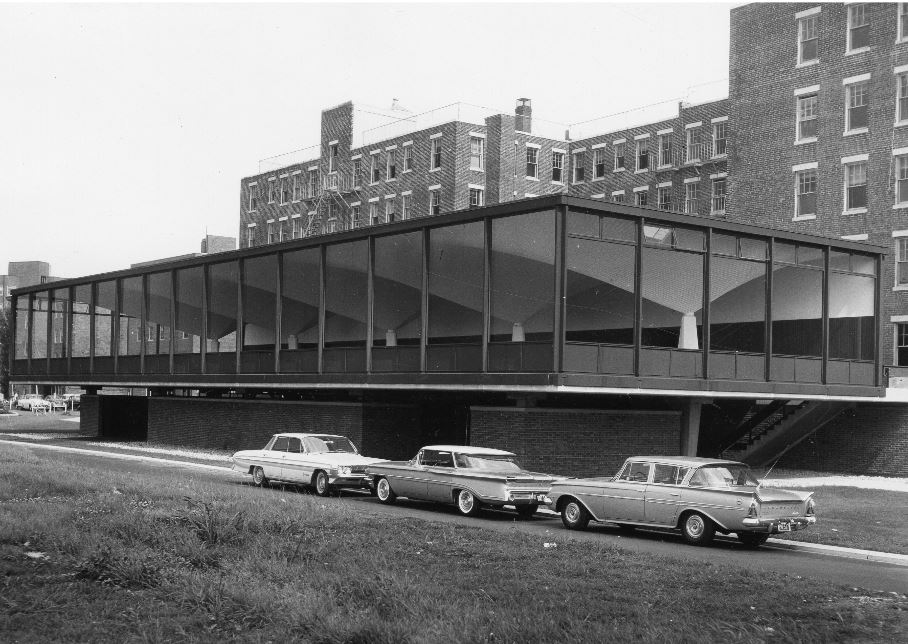
MIT Burton-Conner House Porter Room
6,500 SF of 70 mm BASWA Phon Frost on ceiling with complex, folded geometry for historic preservation of the original architectural design.

Burton-Conner House has been home to MIT undergraduates since 1948, occupying a 1927 building on the Charles River that holds a particular place in the Institute's residential history. When MIT undertook a comprehensive two-year renewal of the five-story building, the Porter Room presented the most architecturally demanding challenge of the project. Originally designed as a dining hall, the space features a series of dramatically folded ceiling planes that rise and pitch across 6,500 square feet, pulling the eye toward views over the river. The geometry defines the room, so any acoustic intervention would have to honor it.
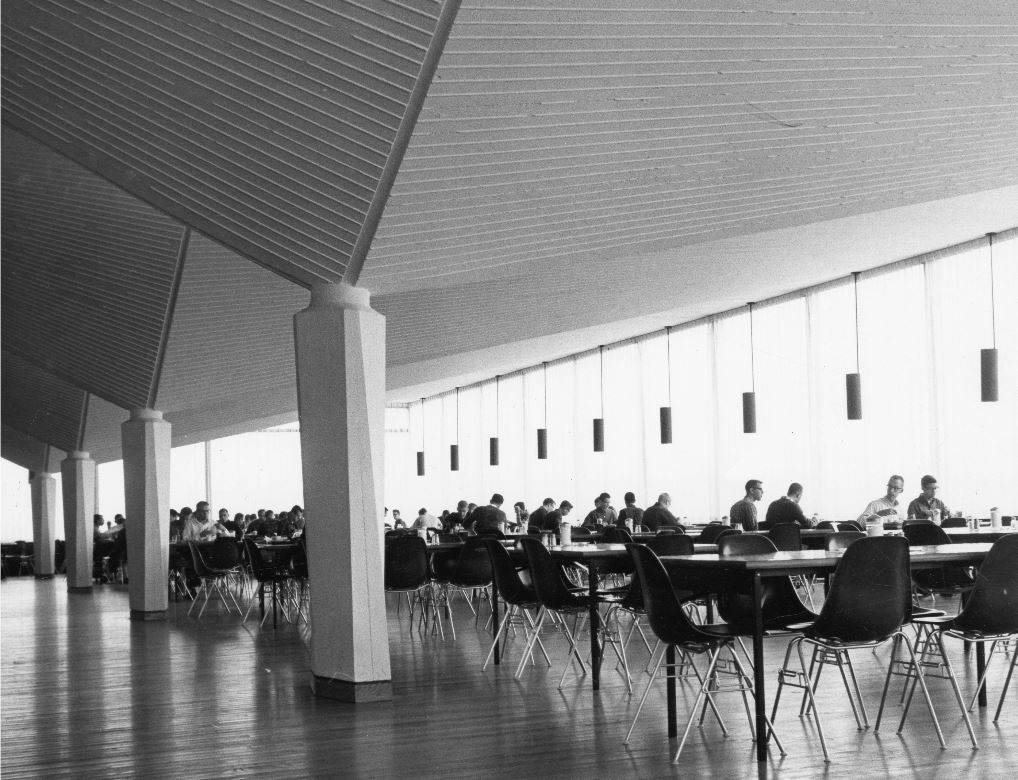
Historical photographs of the Porter Room show the original ribbed concrete ceiling, a surface that was visually true to its mid-century origins but offered little in the way of acoustic control. Decades later, as Kent McKelvie of Cavanaugh Tocci Associates described it, an earlier attempt to address room acoustics had been "ham fisted" in its effort to balance absorption with architectural respect. The challenge handed to Goody Clancy and the project team was to give the renovated Porter Room genuinely useful acoustic performance for its new life as a flexible gathering space, while preserving the geometry that makes it architecturally significant.
BASWA allowed us to meet those goals, and your assistance on site helped ensure an end product that looked AND performed well.
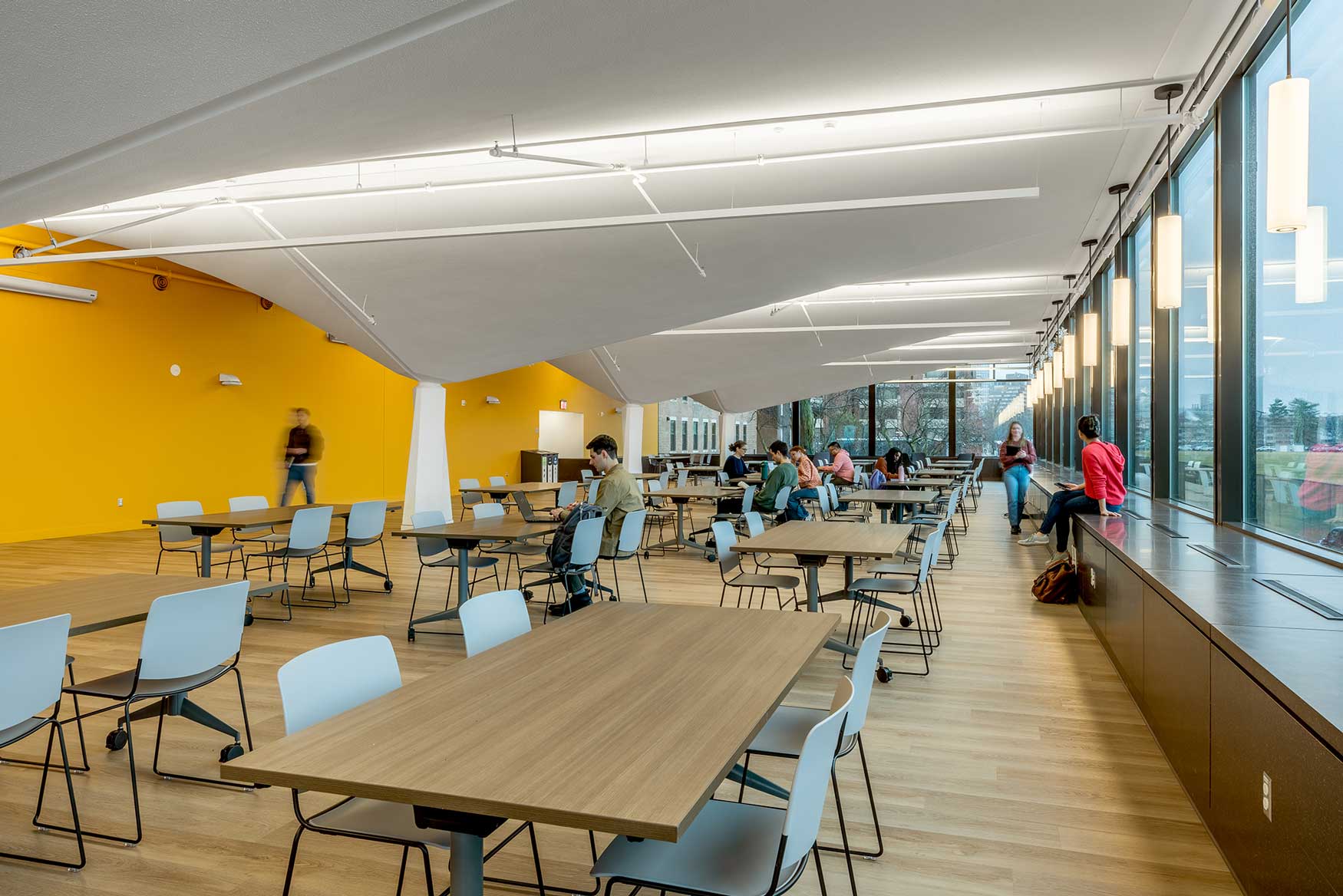
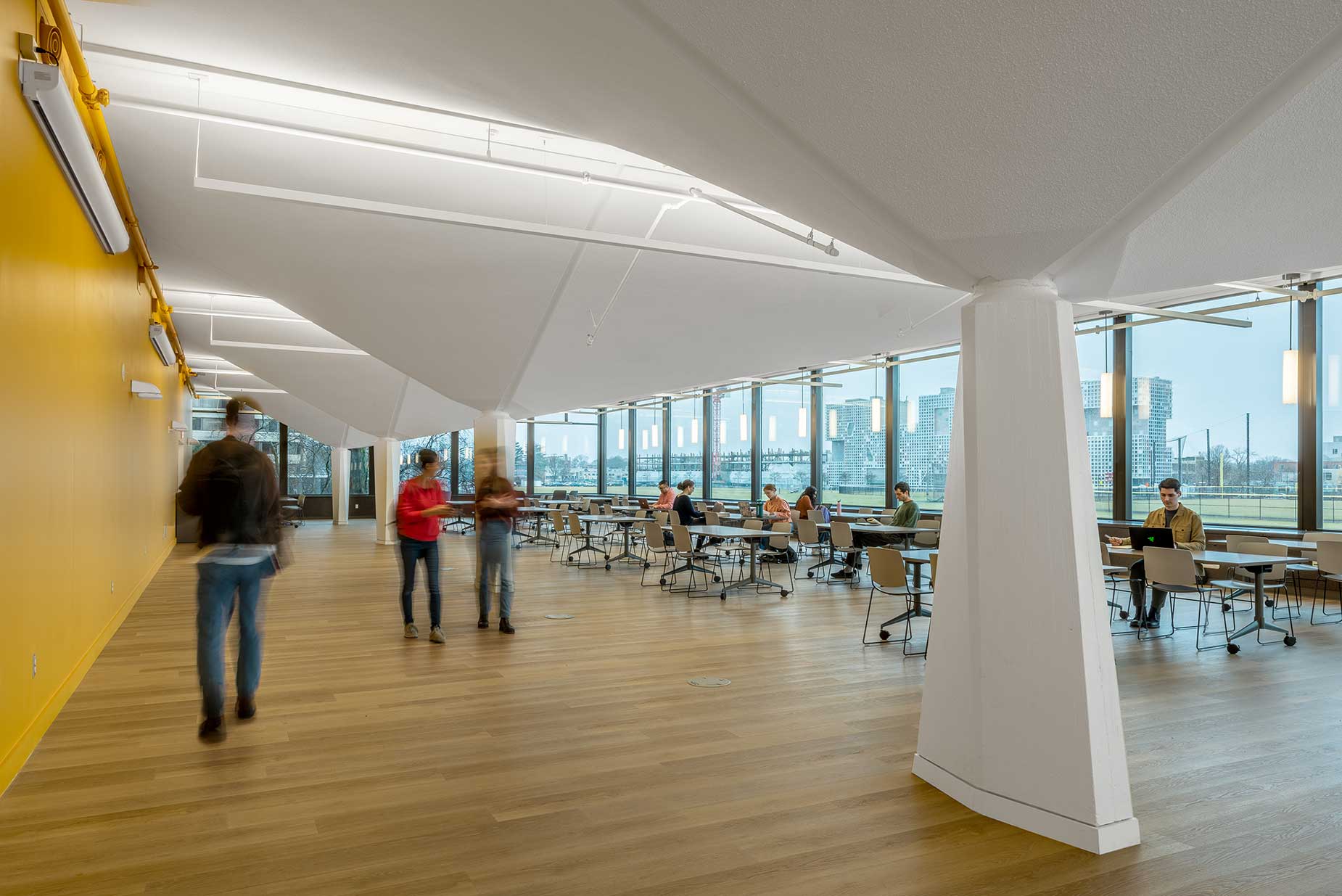
The answer was a monolithic acoustical plaster system applied continuously across the full ceiling surface, following every fold and transition of the original form. BASWA Phon was specified at 70 mm thickness in a natural stone white Frost finish, applied directly over the existing concrete substrate. The result is an acoustic ceiling that reads as a single unbroken surface, without joints, tiles, or panel edges to interrupt the ceilings sculptural quality. At 1.00 NRC, the system delivers full broadband sound absorption, controlling airborne sound and reverberation across the room without being visually demanding.
The photographs of the completed Porter Room reveal how the seamless acoustical plaster finish disappears into the architecture. McKelvie noted that BASWA's on-site assistance during installation was a material factor in achieving an outcome that "looked AND performed well," and that the system allowed the team to meet goals of both visual continuity with the original building and meaningful acoustic control for presentation use. Burton-Conner reopened in 2022. The Porter Room, now a flexible gathering space for residents and the broader MIT community, carries the acoustical plaster ceiling as one of the quieter but more consequential decisions of its renewal.