Datos de Pruebas Acústicas
Resultados de Pruebas Acústicas
Los sistemas de revoque fonoabsorbente sin juntas BASWA han sido probados por agencias de pruebas externas independientes. Los datos de las pruebas simulan los detalles de las condiciones reales de instalación en campo. Las pruebas de coeficiente se calculan siguiendo las directrices de la prueba de absorción acústica ASTM C423 para montaje A y E.
Este gráfico muestra directamente el beneficio del revoque acústico BASWA en comparación con el panel de yeso estándar. Hay 10 veces más absorción de sonido.
BASWA Phon puede añadir de 5 a 7 puntos a una pared o techo con clasificación STC.
Para ver todos los datos del panel, descargue el resumen a continuación.
Tipo A Mount


Tipo E Mount

Otros Datos de Pruebas

Datos de Pruebas de Incendio
BASWA Phon, BASWA DTG, BASWA Basic
Clasificación de Fuego Clase A según el Estándar ASTM E84
BASWA Natural
Clasificación de resistencia al fuego Clase C según la norma ASTM E84

Moho y Hongos
Rendimiento del Sistema BASWA
Todos los sistemas BASWA obtuvieron una puntuación de 10/10 según la norma ASTM D3273, indicando la ausencia de crecimiento.
Otras consideraciones
BASWA ofrece sistemas ideales para un rendimiento duradero en entornos de alta humedad, como natatorios, vestuarios y spas.

Datos de Prueba de VOC
Rendimiento del Sistema BASWA
≤ 0.5 mg/m³, Cumple con el método estándar CDPH/EHLB del Departamento de Salud Pública de CA, Versión 1.2, 2017

Datos de Reflectancia Lumínica
BASWA Base
Valor L de reflectancia lumínica de 91.3 según ASTM E 1477-98
BASWA Fine
Valor L de reflectancia lumínica de 89.6 según ASTM E 1477-98
BASWA One
Valor L de reflectancia lumínica de 90.2 según ASTM E 1477-98
Comparación de sistemas BASWA
BASWA Phon
Características del sistema
- El estándar de la industria para revoques acústicos sin juntas
- Sistema increíblemente versátil que puede replicar curvas complejas de sustratos.
- Sistema con el más alto rendimiento acústico, con valores NRC de hasta 1.00
- Disponible en acabados Classic Fine, Classic Base, Fine, Base, Frost y de textura personalizada
- Disponible en colores personalizados o en piedra blanca natural
Aplicaciones Ideales
- En cualquier lugar, incluyendo espacios con requisitos acústicos estrictos: atrios, auditorios, estudios de grabación, espacios de reunión, galerías y salas de conferencias
- Geometrías curvas, abovedadas o complejas de techos y paredes — el sistema se adapta a prácticamente cualquier perfil de superficie
- Interiores de alta visibilidad donde la estética sin juntas y la calidad del acabado fino son críticas
- Salas que requieren tratamiento tanto en paredes como en techos en un único sistema continuo
Requisitos de Instalación
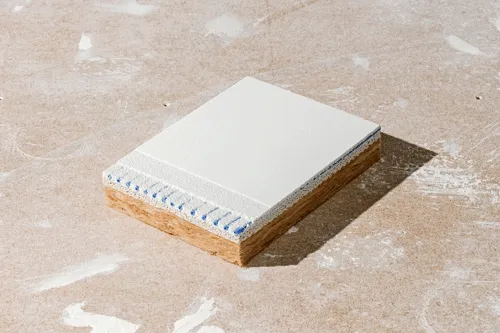
Los paneles BASWA Phon se adhieren directamente a un sustrato estable y continuo. Las juntas biseladas de los paneles se rellenan con BASWA Fill y la superficie se termina con una o dos capas de yeso de agregado de mármol aplicadas a mano con llana.
- Para uso en sustratos sólidos y continuos como paneles de yeso estándar, hormigón o yeso existente
- Los paneles se adhieren directamente; no se requieren fijaciones mecánicas en la superficie
- Capas de acabado aplicadas in situ por aplicadores BASWA capacitados
- Plazo de instalación de 4 a 5 días
Sostenibilidad en un Vistazo
- Los paneles contienen un mínimo del 80% de vidrio reciclado
- El acabado es 95% agregado de mármol reciclado
- Contenido reciclado total en peso: 81.2%–83.3% según el espesor y la selección del acabado
- Libre de la Lista Roja LBC
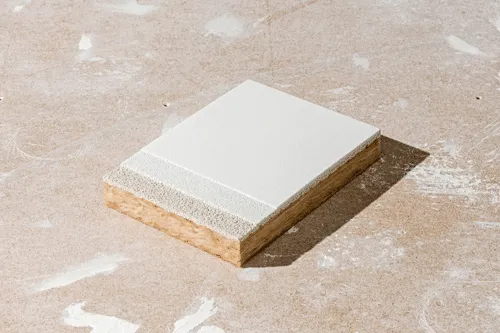
Rendimiento Acústico por Acabado según ASTM 423
Montaje A
Montaje en E
Montaje A
Montaje en E
Montaje A
Montaje en E
Montaje A
Montaje en E
Montaje A
Montaje en E
BASWA DTG
Características del sistema
- Diseñado para la integración directa con sistemas de rejilla de techo suspendido estándar, sin necesidad de un sustrato separado
- Para aplicaciones en techos planos
- Sistema de alto rendimiento, con valores NRC de hasta 0.80
- Disponible en acabados Prime Base, Prime Frost y de textura personalizada
- Disponible en colores personalizados o en piedra blanca natural
Aplicaciones Ideales
- Oficinas de planta abierta, centros de conferencias e interiores comerciales donde ya se han especificado techos suspendidos
- Proyectos con plazos ajustados que requieren una vía más rápida para un techo acústico terminado
- Renovaciones y mejoras para inquilinos donde un nuevo sustrato no es factible
Requisitos de Instalación
Los paneles BASWA DTG se adhieren a un subconjunto de rejilla de paneles de yeso según ASTM C645. La superficie se termina con dos capas de yeso de agregado de mármol aplicadas a mano con llana.
- Para uso en techos sobre subconjunto de rejilla de paneles de yeso según ASTM C645
- No se requiere preparación del sustrato; la rejilla debe estar nivelada y correctamente soportada
- Capas de acabado aplicadas in situ por aplicadores BASWA capacitados
- La instalación típica se completa 1-2 días más rápido que los sistemas comparables
Sostenibilidad en un Vistazo
- Los paneles contienen un mínimo del 90% de vidrio reciclado
- El acabado es 95% agregado de mármol reciclado
- Contenido reciclado total en peso: 83.4%
- Libre de la Lista Roja LBC
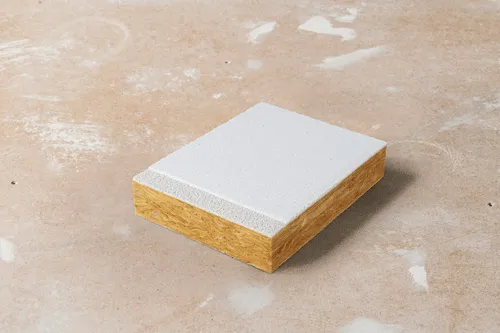
Rendimiento Acústico por Acabado según ASTM 423
Montaje A
Montaje A
Clasificación de la Clase de Atenuación de Techo (CAC) según DIN EN ISO 717-1
BASWA Basic
Características del sistema
- Un sistema de yeso acústico eficiente y rentable diseñado para aplicaciones sencillas en superficies planas
- Sistema resistente a impactos aplicable tanto en techos como en paredes en planos planos
- Formulado para funcionar en entornos de alta humedad, lo que lo hace adecuado para natatorios, vestuarios y espacios similares.
- El cronograma de instalación más rápido de todos los sistemas BASWA — BASWA Basic One puede completarse en 1 o 2 días.
- Sistema de alto rendimiento, con valores NRC de hasta 0.75.
- Disponible en acabados de textura One, Prime Base, Prime Fine y personalizados.
- Disponible en colores personalizados o en piedra blanca natural
Aplicaciones Ideales
- Techos y paredes planos en espacios comerciales, institucionales o recreativos estándar.
- Entornos de alta humedad como piscinas, spas, vestuarios e instalaciones de bienestar.
- Proyectos donde el cronograma y el presupuesto son factores primarios junto con el rendimiento acústico.
- Proyectos de múltiples salas o con planos de planta repetitivos que se benefician de una instalación rápida.
Requisitos de Instalación
Los paneles BASWA Basic se adhieren a un sustrato plano, estable y continuo. La superficie se termina con dos capas de yeso de agregado de mármol aplicadas a mano con llana.
- Requiere un sustrato plano y continuo en buen estado — no apto para superficies curvas.
- No se requiere preparación del sustrato; la rejilla debe estar nivelada y correctamente soportada
- Los paneles se adhieren directamente; no se requieren fijaciones mecánicas en la superficie
- Capas de acabado aplicadas in situ por aplicadores BASWA capacitados
- El cronograma de instalación se comprime significativamente con la selección del acabado One Finish.
Sostenibilidad en un Vistazo
- Los paneles contienen un mínimo del 93% de vidrio reciclado.
- El acabado es de agregado de mármol reciclado en un 86-95%.
- Contenido reciclado total por peso: 82.0-82.8%.
- Libre de la Lista Roja LBC
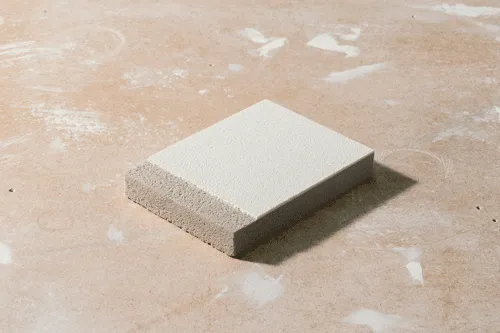
Rendimiento Acústico por Acabado según ASTM 423
Montaje A
Montaje en E
Montaje A
Montaje en E
Montaje en E
Montaje en E
BASWA Natural
Características del sistema
- Un panel de sistema de origen natural, compuesto por fibras de cáñamo y lino, que enfatiza la autenticidad del material y la responsabilidad ambiental.
- Ideal para proyectos que buscan objetivos de diseño centrados en la salud o biofílicos.
- Aplicable tanto a techos como a paredes, incluyendo geometrías de superficie curvas y complejas.
- Formulado para rendimiento en entornos de alta humedad — adecuado para habitaciones húmedas o propensas a la humedad.
- Sistema de alto rendimiento, con valores NRC de hasta 0.75.
- Disponible en acabados Classic Fine, Classic Base, Fine, Base, Frost y de textura personalizada
- Disponible en colores personalizados o en piedra blanca natural
Aplicaciones Ideales
- Superficies de techo y pared curvas, abovedadas o escultóricas que requieren un material de acabado natural.
- Centros de bienestar, spas y espacios de alta humedad donde se desea una estética natural junto con resistencia a la humedad.
- Proyectos con objetivos de construcción sostenible, salud de materiales o diseño biofílico.
- Entornos interiores donde el carácter de los acabados minerales naturales es una prioridad de diseño.
Requisitos de Instalación
Los paneles BASWA Natural se adhieren a un sustrato estable y continuo. Las juntas biseladas de los paneles se rellenan con BASWA Fill y la superficie se termina con una o dos capas de yeso de agregado de mármol aplicadas a mano con llana.
- Para uso en sustratos sólidos y continuos como paneles de yeso estándar, hormigón o yeso existente
- Los paneles se adhieren directamente; no se requieren fijaciones mecánicas en la superficie
- Formulación resistente a la humedad; confirme que los niveles de ventilación y humedad estén dentro de los límites especificados.
- Capas de acabado aplicadas in situ por aplicadores BASWA capacitados
- Plazo de instalación de 4 a 5 días
Sostenibilidad en un Vistazo
- Los paneles contienen un mínimo de 13.5-18.3% de vidrio reciclado, según el espesor.
- El acabado es 95% agregado de mármol reciclado
- Contenido reciclado total en peso: 42.8%–61.6% según el espesor y la selección del acabado.
- Libre de la Lista Roja LBC
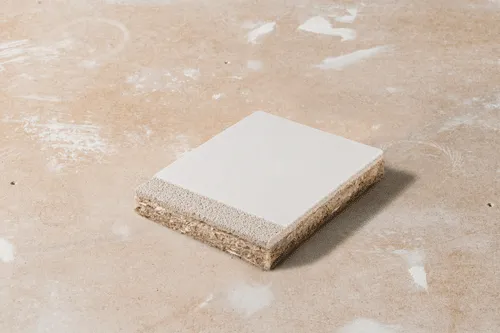
Rendimiento Acústico por Acabado según ASTM 423
Montaje A
Montaje en E
Montaje A
Montaje en E
Montaje A
Montaje en E
Montaje A
Montaje en E
Montaje A
Montaje en E
BASWA Cool
Características del sistema
- Un sistema integrado de refrigeración radiante y acústica — que proporciona absorción sonora y confort térmico en una única superficie sin juntas.
- Elimina la necesidad de difusores de refrigeración mecánica separados o equipos HVAC visibles en el plano del techo.
- Aplicable tanto a techos y paredes curvos como planos, ofreciendo flexibilidad de diseño en geometrías complejas.
- Ofrece la misma estética de yeso sin juntas que otros sistemas BASWA, ocultando completamente la infraestructura radiante.
- Particularmente eficaz en edificios de alto rendimiento que buscan reducir el consumo de energía y mejorar el confort de los ocupantes.
Aplicaciones Ideales
- Edificios comerciales, institucionales o culturales de alto rendimiento que integran la refrigeración radiante en el acabado arquitectónico.
- Espacios donde la visibilidad de los equipos mecánicos entra en conflicto con la intención del diseño — salas de juntas, vestíbulos, galerías y salas de conciertos.
- Geometrías de techo curvas o complejas que requieren rendimiento térmico y acústico.
- Proyectos que buscan certificaciones de eficiencia energética donde los sistemas radiantes contribuyen a la reducción de las cargas mecánicas.
Requisitos de Instalación
BASWA Cool requiere una estrecha coordinación entre los oficios mecánicos y de acabado. La tubería radiante está incrustada dentro del sistema de paneles y debe someterse a pruebas de presión y puesta en marcha antes de la aplicación de las capas de acabado. Se requiere un sustrato estable y continuo.
- Requiere un sustrato estable y continuo; compatible con superficies curvas.
- La tubería radiante debe someterse a pruebas de presión antes de la aplicación del acabado — coordinar con el contratista mecánico.
- Se requiere una coordinación temprana entre oficios: el diseño del sistema radiante debe integrarse en los planos arquitectónicos y de MEP.
- Capas de acabado aplicadas in situ por aplicadores BASWA capacitados después de la aprobación de la puesta en marcha mecánica.
.svg)
Créditos LEED v5
BASWA acoustic está comprometido con la sostenibilidad, desde la fabricación hasta el producto terminado.
Innovamos continuamente con la mejora ecológica en mente para conformarnos a nuestros valores ambientales. BASWA utiliza materiales naturales y reciclados, producción optimizada con recuperación de calor y aglutinantes sin formaldehído ni disolventes.
A medida que la investigación sobre sostenibilidad avanza, BASWA acoustic continúa cumpliendo con las directrices y regulaciones cambiantes; incluyendo LEED v5, WELL y el Living Building Challenge (LBC). HPDs y EPDs están disponibles.
Todas las pruebas de componentes del sistema acústico BASWA son realizadas por laboratorios externos certificados. Los informes de datos de prueba certificados están disponibles bajo solicitud para apoyar su proceso de presentación.
Los paneles BASWA Phon contienen un 92% de materiales naturales y reciclados, fabricados a partir de vidrio reciclado; solo un 8% son materiales sintéticos. Los materiales de acabado contienen un 95% de materiales reciclados, elaborados a partir de agregados producidos durante la extracción de piedra de mármol. Los aglutinantes orgánicos están libres de formaldehído y solubles.
Los sistemas BASWA están libres de COV (Compuestos Orgánicos Volátiles) y cumplen con la Sección 01350 de CA. Los acabados BASWA ofrecen una alta reflectancia lumínica, con un valor L promedio de reflectancia de 0.91 según ASTM E1477. Los valores R del sistema BASWA Phon alcanzan 11.66. La limpieza y el mantenimiento de los sistemas BASWA no requieren limpiadores ni productos químicos nocivos. BASWA acoustic Norteamérica ofrece componentes de sistemas fabricados en EE. UU.
Energía y Atmósfera (EA)
Eficiencia Energética Mejorada
1-12 puntos
OBJETIVO
Diseñar edificios que minimicen el consumo de energía para reducir el daño ambiental causado por la extracción de recursos, la contaminación del aire y las emisiones de gases de efecto invernadero, y para facilitar la transición hacia un futuro de energía limpia.
CONTRIBUCIÓN
Los paneles del sistema BASWA ofrecen una gama de altos valores R en relación con el espesor total del panel. Los acabados BASWA están hechos con arena de mármol reciclada y son frescos al tacto. El mármol tiene una capacidad natural para mantener una temperatura fresca debido a sus propiedades térmicas, absorbiendo rápidamente el calor y liberándolo lentamente, creando un efecto de enfriamiento.
Gestión Mejorada de Refrigerantes
1-2 puntos
OBJETIVO
Eliminar el agotamiento de la capa de ozono y el potencial de calentamiento global, y apoyar el cumplimiento temprano del Protocolo de Montreal, incluida la Enmienda de Kigali, minimizando al mismo tiempo las contribuciones directas al cambio climático.
CONTRIBUCIÓN
BASWA Cool es un sistema de calefacción y refrigeración sin corrientes de aire ni ruido, con excelente absorción acústica y un sistema capilar integrado a gran escala para el transporte de agua, que proporciona un control térmico constante con una fracción de la energía utilizada típicamente en un sistema de aire forzado, y sin los efectos negativos sobre el ozono típicos de los sistemas de aire acondicionado.
Capacidad de enfriamiento a Δ8K; 79,1 W / m2
Capacidad de calefacción a Δ15K; 117,7 W / m2
Materiales y Recursos (MR)
Materiales de Baja Emisión
1-4 puntos
OBJETIVO
Reducir las concentraciones de contaminantes químicos que pueden dañar la calidad del aire y el medio ambiente. Proteger la salud humana y el confort de los instaladores y ocupantes del edificio.
CONTRIBUCIÓN
Los sistemas BASWA y sus componentes han sido probados para verificar su cumplimiento con el Método Estándar Versión 1.2, 2017 del Departamento de Salud Pública de CA (CDPH). Datos de prueba detallados disponibles con resultados de rangos de COV y COVT.
Selección y Adquisición de Productos de Construcción
1-10 puntos
OBJETIVO
Fomentar el uso de productos y materiales con información de sostenibilidad disponible y que tengan impactos ambiental, económica y socialmente preferibles, en línea con el impulso de la industria. Recompensar a los equipos de proyecto por seleccionar productos de fabricantes que han divulgado información de sostenibilidad sobre sus productos y los han optimizado en múltiples áreas de criterios.
CONTRIBUCIÓN
BASWA utiliza fibras vegetales naturales, vidrio reciclado, arena de mármol reciclada postindustrial, aglutinantes orgánicos y materiales sintéticos mínimos para producir los sistemas más sostenibles disponibles.
Cada sistema BASWA ofrece soluciones sostenibles únicas. Los paneles BASWA Phon, BASWA DTG y BASWA Basic están fabricados con vidrio reciclado, lo que reduce los residuos en vertederos y la demanda de nuevas materias primas. Los paneles BASWA Natural están hechos exclusivamente de fibras de cáñamo y lino cultivadas de forma sostenible por agricultores regionales que cumplen estrictas normas ambientales. Los acabados BASWA están hechos de arena de mármol reciclada postindustrial que ayuda a formar una superficie microporosa por la que el sonido puede pasar para ser absorbido dentro del panel del sistema.
El uso de electricidad 100% renovable y generada localmente a partir de energía hidroeléctrica en el proceso de producción de paneles requiere menos energía y emite menos gases de efecto invernadero. El uso exclusivo de agua en lugar de disolventes en nuestros productos ayuda a mantener los COV nocivos fuera de la atmósfera.
Gestión de Residuos de Construcción y Demolición
1-4 puntos
OBJETIVO
Reducir los residuos de construcción y demolición depositados en vertederos e instalaciones de incineración, así como la contaminación del medio ambiente. Reducir los impactos ambientales y el carbono incorporado en la fabricación de nuevos materiales y productos. Retrasar la necesidad de nuevas instalaciones de vertederos que a menudo se encuentran en comunidades de primera línea. Crear empleos verdes y mercados de materiales para los servicios de construcción de edificios.
CONTRIBUCIÓN
La instalación típica resulta en menos del 3% de paneles descartados. Los recortes de paneles pueden ser aceptables en instalaciones de reciclaje de vidrio mixto. Los cubos de plástico que contienen materiales húmedos son reciclables o reutilizables. Los paneles y materiales de cubos no utilizados pueden guardarse para futuros proyectos.
Algunos productos están disponibles en embalaje de cartón, en cajas de cartón en lugar de cubos de plástico, lo que reduce los residuos plásticos y aumenta los materiales por palé en un 50%, y reduce el peso de entrega en más del 50%.
Calidad Ambiental Interior (EQ)
Calidad del Aire Mejorada
1-2 puntos
OBJETIVO
Diseñar para una mayor calidad del aire interior (CAI) para proteger mejor la salud de los ocupantes del edificio.
CONTRIBUCIÓN
Los sistemas BASWA y sus componentes han sido probados para verificar su cumplimiento con el Método Estándar Versión 1.2, 2017 del Departamento de Salud Pública de CA (CDPH). Datos de prueba detallados disponibles con resultados de rangos de COV y COVT.
Experiencia del Ocupante
1-7 puntos
OBJETIVO
Ir más allá de los espacios neutros o suficientes hacia un diseño centrado en el ser humano que fomente la personalización, el disfrute y las conexiones emocionales entre las personas y el edificio, aumentando así la probabilidad de una satisfacción constante y una gestión continua.
CONTRIBUCIÓN
Los sistemas BASWA interactúan con múltiples sentidos. El sonido y la reverberación nos permiten construir nuestra percepción del espacio y desarrollar una conexión auditiva con los demás y con el lugar.
Los sistemas BASWA pueden acoplarse para proporcionar una absorción acústica flexible entre zonas, manteniendo una estética sin fisuras. Los sistemas BASWA ofrecen un alto rendimiento, con valores específicos para cada sistema y acabado, y han sido probados bajo condiciones de instalación estándar, montaje A y montaje E según ASTM C423, así como pruebas CAC y STC.
Los sistemas BASWA pueden instalarse en áreas exteriores cubiertas para mitigar la transferencia de sonido a espacios interiores.
Los acabados BASWA están hechos con arena de mármol reciclada, lo que ofrece muchos beneficios además de durabilidad y estética natural. El mármol tiene una capacidad natural para mantener una temperatura fresca debido a sus propiedades térmicas, absorbiendo rápidamente el calor y liberándolo lentamente, creando un efecto de enfriamiento. Además, los paneles del sistema BASWA ofrecen una gama de altos valores R en relación con el espesor total del panel.
Los acabados BASWA también presentan un alto valor L de reflectancia lumínica de 91.03 según ASTM E 1477-98.
Accesibilidad e Inclusión
1-2 puntos
OBJETIVO
Para satisfacer las diversas necesidades de los ocupantes y mejorar la usabilidad generalizada del edificio, fomentando un sentido de pertenencia individual y colectivo.
CONTRIBUCIÓN
La conexión entre una acústica mejorada y los seres humanos subraya la necesidad de acceso al bienestar en todos los espacios y de conocimiento sobre el impacto de la acústica en la salud diaria.
Los sistemas BASWA interactúan con múltiples sentidos. El sonido y la reverberación nos permiten construir la percepción del espacio y determinar la conexión auditiva con otras personas y lugares. La impresión auditiva es clave para proporcionar confort acústico y calma, y puede influir en la comprensión de la experiencia espacial.
Los sistemas BASWA pueden acoplarse para proporcionar una absorción acústica flexible entre zonas, manteniendo una estética sin juntas. Los sistemas BASWA ofrecen un alto rendimiento, específico para cada sistema y acabado seleccionado, y han sido probados bajo diversas condiciones de instalación, montaje tipo A y montaje tipo E según ASTM C423.
Limpieza y Mantenimiento
Los sistemas BASWA se aplican sobre un sustrato estable y sellado. El aire no atraviesa el producto, por lo tanto, solo se requiere un mantenimiento superficial menor.

Polvo y Suciedad Superficial
El polvo y la suciedad de la superficie se pueden aspirar utilizando un accesorio de cepillo suave o eliminar con aire a presión. La eliminación también se puede lograr aplicando cinta de enmascarar en el área afectada para levantar el polvo o la suciedad sin dañar el acabado. Más información.

Manchas de Alimentos y Orgánicas
Las manchas accidentales causadas por material orgánico suelen eliminarse con el uso de BASWA Clean, que utiliza la oxidación para penetrar y eliminar manchas y olores de una superficie BASWA acabada.

Manchas Profundas y Daños por Agua
Incluso las manchas de agua profundas en los acabados BASWA pueden remediarse. El equipo técnico de BASWA recomienda utilizar BASWA Clean para la mayoría de las manchas de agua, pero puede ayudar a encontrar soluciones adaptadas al proyecto y al problema.
Eliminación de partículas superficiales
Aprenda cómo eliminar correctamente el polvo superficial y las huellas dactilares de un acabado BASWA
Eliminación de manchas orgánicas
Aprenda cómo utilizar BASWA Clean para eliminar manchas y olores de los sistemas BASWA
Protección de los sistemas BASWA contra las manchas y la suciedad con BASWA Protect
Descubra cómo BASWA Protect proporciona una capa protectora, transparente y profunda repelente al agua a los sistemas BASWA para prevenir manchas antes de que aparezcan.
Instrucciones para aplicar correctamente los parches de BASWA Phon
Una reparación adecuada de un sistema BASWA garantiza un aspecto monolítico de la superficie. Estas directrices se refieren a pequeñas reparaciones.
Recursos de Video
Encontrar confort acústico
Karin von Arb y Markus Häusermann explican los beneficios de considerar la acústica en su hogar.
Instalación de BASWA Phon
Aprenda cómo se instalan los sistemas de revestimiento acústico BASWA Phon, y qué puede esperar del proyecto terminado.
¿Cómo funciona BASWA Phon?
El sistema de revestimiento acústico fonoabsorbente sin juntas BASWA Phon se utiliza para reducir el tiempo de reverberación.
Creando Arquitectura Saludable
Una exploración sobre la acústica y cómo la función puede equilibrarse con el atractivo estético para crear una arquitectura que proporcione confort y bienestar.
Museo de la Biblia
Instalado por Manganaro Midatlantic, el yeso fonoabsorbente BASWA Phon se integró a la perfección en el diseño para minimizar los niveles de ruido.
